RSS 2.0
  • Home
  • About
  • Aligners
  • Genomes
  • VarScan
  •  

    Recurrent splicing mutations in MDS and leukemia

    December 15th, 2011

    Myelodysplastic syndrome (MDS, also called preleukemia) is a blood disorder characterized by ineffective production of myeloid cells, or leukocytes. The disorderly and ineffective production of blood cells from stem cells in the bone marrow results in low blood counts, or cytopenias. As many of 30% of MDS cases progress to full-blown, chemotherapy-resistant secondary AML. This week in Nature Genetics, two studies report recurrent mutations in splicing-related genes in blood tumors.
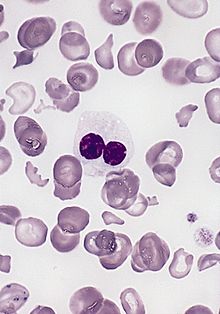
    MDS Cells (Wikipedia)

    First, Tim Graubert and colleagues describe the whole-genome sequencing of an MDS-derived secondary AML tumor and a matched normal (skin) sample. They detected and validated 507 somatic single-nucleotide variants in the tumor, nearly all of which (505) were detected in the MDS sample. Among these were 30 coding SNVs, of which one was a missense mutation in the U2AF1 gene. The same codon of U2AF1 was also mutated in two other MDS cases evaluated by WGS, highlighting it as a potential recurrently mutated gene. The authors undertook systematic sequencing of U2AF1 exons in 150 MDS cases, and found that 8.7% had mutations at Ser34.

    Characterization of Recurrent U2AF1 Mutations

    The authors undertook deep genomic resequencing, cDNA sequencing, and other experiments to characterize the nature of the U2AF1 mutations, finding that:

    • Mutant allele frequencies were at 40-50%, suggesting that the mutation was present in most or all tumor cells.
    • • SNP arrays and WGS indicated no large deletions or uniparental disomy spanning the U2AF1 locus.
    • • Deep cDNA sequencing demonstrated that both wild-type and mutant alleles were expressed.
    • • There were no apparent differences in the amount of U2AF1 mRNA between wild-type and mutated samples.
    • • In the 150 cases examined, no other positions in the gene were mutated (other than residue 34).

    Taken together, these observations suggest that U2AF1 alteration was an early, initiating event and likely represents a gain-of-function mutation.

    U2AF1 and Splicing Factors

    U2AF1 encodes a small regulatory subunit of the U2AF splicing factor. It binds the 3′ AG splice acceptor dinucleotide of the pre-mRNA target intron, and forms a heterodimer with U2AF2, which binds the adjacent polypyrimidine tract. U2AF1 is highly conserved, and loss of both copies is lethal in many species. Although it’s not known which domain of U2AF1 binds the mRNA, the Ser34 mutation occurs in a zinc-finger motif that may have RNA binding activity. Interestingly, in vitro reporter assays revealed that the Ser34 mutation causes an increase in splicing activity and more exon skipping relative to wild-type U2AF1. Further, an analysis of differentially expressed genes (by microarray) between samples with or without U2AF1 mutations revealed that three of the top functional categories for down-regulated genes were splicing- or RNA-recognition-motif-related genes. This observation may reflect one or more compensatory mutations for the increased splicing activity of U2AF1 mutants.

    Recurrent Mutation of SF3B1 in Chronic Lymphocytic Leukemia

    A second study in Nature Genetics, led by Victor Quesada and colleagues, employed exome sequencing to identify recurrent mutations in chronic lymphocytic leukemia (CLL), the most common form of adult leukemia in western nations. The authors sequenced the exomes of tumor samples and matched controls from 105 patients with CLL, 60 of which had mutated IGHV regions (a common alteration in CLL) and 45 of which did not. They reported ~45 somatic mutations per case, and observed more protein-altering mutations in IGHV-mutated samples (12.8 +/- 0.7) than non-IGHV-mutated (10.6 +/- 0.7). Comparing this study to their previous work (WGS of 4 CLL cases), the authors identified several new recurrently-mutated genes, including:

    • SF3B1, a subunit of the spliceosomal U2 snRNP11;
    • POT1, a nuclear protein involved in telomere maintenance12;
    • CHD2, which regulates gene expression by modification of chromatin structure13
    • LRP1B, which has recently been defined as a tumor suppressor in different malignancies

    The authors focused on SF3B1 mutations, which was altered by somatic point mutations in ~10% of cases. Systematic screening of 279  cases by 3730 sequencing revealed that 9.7% of CLL tumors harbored SF3B1 mutations, making this the most frequently mutated gene in CLL identified to date. The protein encoded by SF3B1 is involved in the binding of the U2 snRNP to the branch point near 3′ splice sites. It interacts with RNA sequences and at least two proteins near the branch point: the early 3′-splice-site recognition factor U2AF65 and the branch point–binding protein SF3B14, as well as the RNA sequences near the branch point.
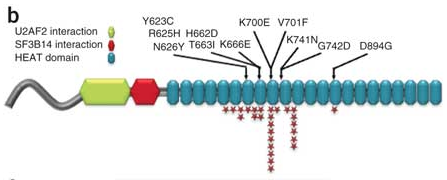
    SF3B1 Mutations. Credit: Quesada et al., Nat. Genet., 2011

    RNA-seq of SF3B1-mutated cases revealed some patterns of aberrant splicing, most of which paired a known 5′ donor site with a new, abnormal 3′ acceptor site. An analysis of splicing target genes revealed truncated versions of SLC23A2, a vitamin C transporter, and TCIRG1, one of whose gene products is a T-cell immune regulator. Another altered gene was FOXP1, known to be dysregulated in diffuse large B-cell lymphoma; the altered transcript lacked two PEST sequences normally required for protein degradation.

    Role of Splicing in Tumor Development and Progression

    Most adult tumors harbor hundreds or thousands of somatic mutations, only a fraction of which are likely to drive development and growth. Recurrence of mutations in the same gene or pathway remains the best way to isolate these “driver” mutations from background passenger events. These two studies, and a handful of others published late this year, suggest an important role for aberrant splicing in the early development of myeloproliferative disorders, such as MDS/sAML and CLL. What’s particularly important is that these appear to be gain-of-function mutations, which opens the door to new potential targeted therapies. It’s one step closer to personalized medicine for cancer patients, brought to you by next-generation sequencing.

    References

    Graubert TA, Shen D, Ding L, Okeyo-Owuor T, Lunn CL, Shao J, Krysiak K, Harris CC, Koboldt DC, Larson DE, McLellan MD, Dooling DJ, Abbott RM, Fulton RS, Schmidt H, Kalicki-Veizer J, O’Laughlin M, Grillot M, Baty J, Heath S, Frater JL, Nasim T, Link DC, Tomasson MH, Westervelt P, Dipersio JF, Mardis ER, Ley TJ, Wilson RK, & Walter MJ (2011). Recurrent mutations in the U2AF1 splicing factor in myelodysplastic syndromes. Nature genetics PMID: 22158538

    Quesada V, Conde L, Villamor N, Ordóñez GR, Jares P, Bassaganyas L, Ramsay AJ, Beà S, Pinyol M, Martínez-Trillos A, López-Guerra M, Colomer D, Navarro A, Baumann T, Aymerich M, Rozman M, Delgado J, Giné E, Hernández JM, González-Díaz M, Puente DA, Velasco G, Freije JM, Tubío JM, Royo R, Gelpí JL, Orozco M, Pisano DG, Zamora J, Vázquez M, Valencia A, Himmelbauer H, Bayés M, Heath S, Gut M, Gut I, Estivill X, López-Guillermo A, Puente XS, Campo E, & López-Otín C (2011). Exome sequencing identifies recurrent mutations of the splicing factor SF3B1 gene in chronic lymphocytic leukemia. Nature genetics PMID: 22158541

    AddThis Social Bookmark Button

    Somatic Mutation Detection in Whole Genome Sequencing Data

    December 8th, 2011

    A paper online at Bioinformatics describes our flagship algorithm for detecting somatic point mutations in whole-genome sequencing of tumor samples. This freely available software package, called SomaticSniper, performs a Bayesian comparison of the genotype likelihoods in tumor and normal samples at every [covered] position in the genome.

    Overview
    Documentation
    Install

    The study includes a detailed investigation of common sources of false positive mutation calls (usually from sequencing- or alignment-related artifacts) and describes a filtering strategy to remove them from mutation callsets.

    Inception: First Cancer Genomes

    Like many bioinformatics algorithms, SomaticSniper reached publication after a long and colorful history. It began in 2008 when we sequenced the first cancer genome, AML1. At the time, we were generating fragment-end, 32 bp reads on early Illumina GA instruments. It took over a hundred lanes to achieve ~30-fold coverage on each sample (tumor and normal). We were in dire need of a short read aligner that could handle this amount of data, and Maq answered the call (see my Maq Top Ten).

    In addition to serving as one of the most widely used short read aligners, Maq included a probabilistic genotype calling model for detecting germline SNPs in a single genome. Dave Larson (the lead author) and others from our group developed an algorithm to compare genotype likelihoods between tumor and normal, to compute the probability that a site is not somatic given the sequence data. Putative somatic mutations receive a somatic score, a Phred-scaled value representing the quality of the call. Here’s something interesting: during the data generation phase for AML1, as we added more sequence, the number of candidate mutations went down. This is because only a tiny fraction of variants in a tumor genome are somatic; the vast majority are germline variants also present in the normal. As better coverage was achieved, more and more variants turned out to be germline. By the end, it turned out that there were just ten somatic coding mutations in the tumor genome of AML1, a cytogenetically normal leukemia. A lot of people were flabbergasted. Ten little changes, and a woman got leukemia.

    More Genomes, Better Algorithm

    This algorithm became the core of our cancer whole-genome sequencing analysis pipeline, evolving and improving over the course of the second cancer genome (AML2) in the New England Journal, a breast cancer genome (BRC1), and others. It found, among others, mutations in IDH1 and DNMT3A that we and others showed to be recurrent across many tumors. The algorithm’s name changed a few times, settling at last on SomaticSniper. It’s now a lean and hungry animal, capable of processing high-coverage whole-genome sequence pairs in a matter of hours.

    Filtering Out the Noise

    No matter how good the mutation caller, there are going to be some false positives. This is because you’re looking for a one-in-a-million event, a true somatic mutation. Raw SomaticSniper calls therefore undergo a series of Maq-inspired filters. Sites are retained if they meet these criteria:

    • Covered by at least 3 reads
    • Consensus quality of at least 20
    • Called a SNP in the tumor sample with SNP quality of at least 20
    • Maximum mapping quality of at least 40
    • No high-quality predicted indel within 10 bp
    • No more than 2 other SNVs called within 10 bp

    Sites passing these criteria are subjected to two additional filters: a screen against germline variants from dbSNP (remove if matches position and allele of known non-cancer dbSNP) and an LOH filter (remove if normal is heterozygous and tumor homozygous for the same variant allele). Sites removed by the former are probably inherited variants under-sampled in the matched normal, while sites removed by the latter are likely due to large-scale structural changes (e.g. deletions) causing the loss of one allele. Finally, the filter-passed mutations are classified as high-confidence (HC) if the somatic score is at least 40 and the mapping quality is at least 40 (for BWA) or 70 (for Maq).

    Frequent Sources of False Positives

    Even sites that pass the filters above are vulnerable to certain sequencing and alignment artifacts that produce false positive calls. A detailed study revealed (as many in the field know already) a few common sources of false positives: strand bias, homopolymer sequences, paralogous reads (deriving from a paralogous region of the genome, but mapped to the wrong region, usually three or more substitutions), and the read position of the predicted variant. The latter type of artifact is something new; it turned out that variants only seen near the “effective” 3′ end of reads (the start of soft-trimmed bases or the actual end of the read if untrimmed) were more likely to be false positives. This may be a combination of sequencing error, which is higher at the 3′ end of reads, and alignment bias favoring mismatches over gaps near the ends of reads. In any case, false positives deriving from these common causes tend to have certain properties enabling them to be identified and removed while maintaining sensitivity for true mutations.

    SomaticSniper adds to the growing arsenal of tools developed by our group to address the significant challenges presented by next-generation sequencing data analysis.

    References

    Larson, DE., Harris, CC., Chen, K., Koboldt, DC., Abbott, TE., Dooling, DJ., Ley, TJ., Mardis, ER., Wilson, RK., & Ding, L. (2011). SomaticSniper: Identification of Somatic Point Mutations in Whole Genome Sequencing Data Bioinformatics, Online : doi: 10.1093/bioinformatics/btr665

    AddThis Social Bookmark Button

    Prostate cancer exomes, and sequencing matched normals

    November 29th, 2011

    A new study in PNAS from Jay Shendure’s group at the University of Washington describes exome sequencing of 23 prostate cancers. These tumors were derived from aggressive primary tumors or lethal metastases, and propagated in immunocompromised mice as xenografts. For most of the tumors, matched normal DNA was unavailable, so the authors developed a filtering strategy in which the growing catalogs of human sequence variation are employed to identify and remove germline polymorphisms from the lists of tumor genetic variants. Specifically, the authors used pilot project data from the 1,000 Genomes Project, and internally-available variants from ~2,000 additional exomes they’d sequenced. For the majority of tumors, this reduced ~13,500 coding SNVs down to ~350 “nov-SNVs” per tumor (a reduction of 97.4%). The authors readily admit that these nov-SNVs comprise a mixture of:

    1. Somatic mutations that were present in the original tumor.
    2. Somatic mutations that occurred during tumor propagation and evolution in the mouse model.
    3. Germline variants present in the patient’s constitutional genome that are absent from public databases, presumably due to rarity (e.g. private SNPs).
    4. False-positive variant calls.

    Recurrently Altered Gene Filtering

    Given a set of mutations from multiple tumors of the same type, the logical next step was to look for genes recurrently altered in the group, since recurrence offers perhaps the best evidence of genes harboring “driver” mutations, which confer advantages for tumor growth and progression, as opposed to “passenger” mutations which do not. The problems for this study were two-fold: First, 16 unique tumors (from unrelated individuals) is a small cohort size with correspondingly small power to identify recurrent alterations. Nothing to be done about that. Second, even looking at just 16 tumors, there were 135 genes harboring non-synonymous nov-SNVs in two or more exomes. A substantial fraction of these are undoubtedly due to rare germline variants missed by the filter, rather than recurrently mutated genes.

    To address this, the authors excluded from consideration the 1% of all genes (not just ones mutated in this study) with the highest rate of rare germline variants in control exomes. In other words, they removed genes with the highest rate of germline polymorphism, which I note likely includes (1) genes with high genetic diversity, and (2) genes whose sequence characteristics make them more likely to give rise to false-positive variant calls. The danger of this strategy is that, in principle, genes with high genetic diversity are more prone to mutations, and it’s quite possible that some of these are driver genes for carcinogenesis. Nevertheless, this strategy reduced the list to 104 genes altered in two or more exomes. That’s still too many to tell a story about, so another step was taken.

    Using a control set of 1,865 exomes, the authors performed an iterative sampling (I believe this is a bootstrap) to estimate the probability that a given gene would harbor recurrent nov-SNVs that were due to germline variation. Any genes with a germline recurrence probability of 0.001 or higher were excluded from the list, which dropped it sharply down to 20 genes with nov-SNVs in two or more prostate tumors (10 of these were found in three or more).

    After all of these steps were taken, the top recurrent gene was TP53, which was altered in 5 of 16 tumors (31.25%). No other gene had as many recurrent hits in the study. This is a vote of confidence for the approach, because TP53 is the one of the most frequently perturbed gene in many solid tumor types, including breast and ovarian cancers. Another believable recurrent gene was GPC6, which encodes a cell surface proteoglycan believed to act as a receptor for growth factors and other signaling molecules. Other recurrent genes highlighted in this study (DLK2 and SDF4) are less convincing. The simple fact is that we don’t know for certain which mutations are truly somatic in the primary tumor, so it’s difficult to draw strong conclusions.

    Direct Comparison with Matched Normals

    A few of the tumors did have matched normal tissue available, and the authors examined these in detail to assess the accuracy of their germline filtering approach. For three tumors, the authors had (1) mouse xenograft tumor tissue, (2) tumor tissue taken from the patient prior to metastasis, and (3) matched normal tissue. They applied exome sequencing to these to determine set of true somatic mutations (valid mutations) in the original tumor exomes. Valid mutations were compared with the xenograft’s predicted nov-SNVs to determine the number of valid mutations detected (valid detected), the number missed (valid missed), the fraction detected (sensitivity), and the proportion of nov-SNVs that were actually false positives (either germline variants or mis-calls).

    Tumor ID nov-SNVs Valid Mutations Valid Detected Valid Missed Sensit- ivity False Positives
    LuCap92 193 56 51 5 91.07% 73.58%
    LuCap145.2 281 122 106 16 86.89% 62.28%
    LuCap147* 2,122 2,045 1,823 222 89.14% 14.09%

    Note that only LuCap 92 was the same tumor tissue that was used to make the xenograft; the other two (LuCap 145.2 and LuCap 147) were neighboring metastases, and presumably closely related to the xenografted tumor. Exome sequencing and germline filtering of the xenograft enabled detection of ~89% of valid somatic mutations across all three cases. This is worrisome, because it means that 11% of valid somatic mutations were removed by the germline filtering strategy. More on that later. Perhaps even more troubling is the inferred false positive rate (fraction of nov-SNVs that are not valid somatic mutations in the tumor), which was ~68% for LuCap 92 and LuCap 145.2.

    LuCap 147 is notable in that it was one of three “hypermutated” prostate cancer tumors, with 10-fold the number of nov-SNVs. It also had a lower false-positive rate because there were so many valid somatic mutations to detect. There were no distinctive feature to explain the high number of mutations in hypermutated tumors, though it suggests an acquired defect in DNA repair machinery. As only 15% of tumors had this mutation phenotype, the low false positive rate is an outlier. For most tumors, two thirds of the nov-SNVs obtained by the filtering approach are not valid somatic mutations.

    Reasons to Always Sequence the Matched Normal

    I have heard it said that sometime in the near future, our catalogs of human genetic variation will be complete enough that we won’t need to sequence matched normal tissue when studying cancer samples. The authors of this study claim that their results give credence to that notion. I respectfully disagree. True, the germline filtering strategy provided a 150-fold enrichment for valid somatic mutations. However, more than half of the final set of nov-SNVs were false positives (not somatic), and 11% of valid somatic mutations were inadvertently removed. I give you, then, my reasons why I believe we should always sequence the matched normal:

    1. Public databases are not as good as you think. In this study, curated catalogs of sequence variants from known sources (the authors themselves, and the 1,000 Genomes Project) overlapped with 11% of valid somatic mutations, causing their removal. A filter based on the latest dbSNP is even more dangerous because, as some of us have recently discovered, dbSNP contains a lot of somatic (not inherited) mutations. This is because certain cancer projects have submitted their somatic mutation callsets to dbSNP, and these have been accepted. Also, given the low barrier to entry, one should be aware that a lot of dbSNP entries are experimental false positives. Both of these can overlap with mutations in a tumor genome and cause them to be dismissed as germline variants.
    2. Non-SNV alterations are not amenable to filtering. Tumor genomes acquire insertions, deletions, structural variants, and copy number alterations, some of which may activate oncogenes or disrupt tumor suppressors. Let’s be honest: the databases of non-SNV variants in germline form are woefully incomplete. Unlike SNVs, the coordinates and alleles of larger variants are ambiguous, which makes comparisons to existing variant catalogs very difficult. There are also other types of genetic changes in a tumor, such as loss of heterozygosity (LOH), that will be missed when you don’t know the normal genotype.
    3. True somatic mutations are exceptionally rare compared to germline variants. Inherited sequence variants occur at a rate of one per 500-1000 base pairs. In contrast, for most tumors, somatic mutations occur at a rate of one per million base pairs. Let’s say you have 20,000 coding variants in a tumor and 98% of those are in dbSNP. That leaves 400 private SNPs that filtering won’t remove, whereas most solid tumors harbor less than 100 somatic coding mutations. In this realistic scenario, only one out of every five post-filtered variants is a somatic mutation.
    4. Sequencing is cheap, but mistakes are not. Not long ago, you could argue that sequencing matched normals was too costly to be done systematically, even if they were available. That’s no longer the case. A single HiSeq lane gives you enough sequence for two exomes. Why not eliminate the largest source of false-positive mutations – the constitutional genome – by sequencing it as well? It will give you better predictions, and if you go on to validate candidate mutations (as you certainly should), it will probably end up saving you money. Trust me, it’s far better to sequence tumor-normal pairs together, at the same time, same exome platform, ideally same instrument run, to minimize batch effects between them.

    Availability of Matched Normals

    Of course, sequencing a matched normal sample requires that such material is available. I recognize that this is not always the case. Some of the better-studied cancer cell lines, for example, were made from the tumors of long-dead cancer patients. For less common cancer types, many of the available samples will be frozen or FFPE samples, and getting a matched normal won’t be possible. However, if matched normal tissue is available, I’d argue that it should be assigned for sequencing under identical protocols as the tumor sample. And when you find those germline variants, don’t forget to submit them to dbSNP.

    References

    Kumar A, White TA, MacKenzie AP, Clegg N, Lee C, Dumpit RF, Coleman I, Ng SB, Salipante SJ, Rieder MJ, Nickerson DA, Corey E, Lange PH, Morrissey C, Vessella RL, Nelson PS, & Shendure J (2011). Exome sequencing identifies a spectrum of mutation frequencies in advanced and lethal prostate cancers. Proceedings of the National Academy of Sciences of the United States of America, 108 (41), 17087-92 PMID: 21949389

    AddThis Social Bookmark Button

    The Great Divide: Cancer Genomics and Clinical Care

    November 23rd, 2011

    Fueled by advances in next-generation sequencing and consortium-scale efforts, the field of cancer genomics is maturing at a rapid pace. As the catalog of genetic lesions in cancer expands across samples and tumor types, we are learning more and more about the DNA sequence changes underlying tumor development, growth, progression, and response to treatment. One would think that these advances would quickly translate into better diagnosis and treatment of the disease. If only it were so. Despite their potential to improve patient management and care, the findings of cancer genomics efforts have been slow to reach the clinic.

    One Step Forward: Limited Genetic Testing

    There has been some progress. Major cancer centers like Johns Hopkins University announced that they’ll begin applying standard genetic tests to every cancer patient that comes in the door. While limited to a handful of common, clinically-actionable mutations, the test provides some genetic information that could guide the prognosis and treatment.

    Genes Currently Tested
    ALK
    BRAF
    CHIC2
    CSF1R
    CTNNB1
    DNMT3A
    EGFR
    FLT3
    IDH1
    IDH2
    JAK2
    KIT
    KRAS
    MET
    MAPK1 (ERK)
    MAPK2 (MEK)
    MLL
    NPM1
    NRAS
    PDGFRA
    PIK3CA
    PTEN
    PTPN11
    RET
    RUNX1
    TP53
    WT1

    It is good to see a general acknowledgement that genomic information is relevant for cancer patient management. And these clinical testing panels do offer some important advantages. First and foremost, these are well-established cancer genes which offer relevant diagnostic/prognostic/treatment-related information. Second, the limited scope allows for a perfection of technical assays, assurance of completeness, and a reasonable scope for interpretation of the findings. Third, mutations in these genes are recurrent across a number of tumor types, which means that this standard test can be given to any cancer patient, with a good chance of finding something actionable. Finally, the use of sequencing instead of a genotyping platform makes it feasible to detect rare, occult mutations without knowing the position and variant allele beforehand.

    Limitations of Focused Testing Panels

    Of course, for those of us in the sequencing world, it’s hard not to see the disadvantage. The use of sequencing and FISH will improve the sensitivity of the assay, but some types of alterations (such as SVs) will be missed. Case in point: in a study published in JAMA this year, Welch and colleagues used whole-genome sequencing to identify a cryptic fusion oncogene (bcr3 PML-RARA) in a patient with acute promyelocytic leukemia (APL). This discovery qualified the patient for treatment with all-trans retinoic acid (ATRA), which induced cancer remission and saved her life.

    There are currently 468 known, curated cancer genes according to the Cancer Gene Consensus, and somatic mutations have been reported in hundreds (if not thousands) of others. Large-scale sequencing efforts are revealing that a single tumor may harbor anywhere from ten to 1,000 mutations in coding genes. Yes, only a fraction of these are likely to be driver events, and some of those will occur in genes currently tested for in these panels. Even so, we know other important cancer genes are out there. Once they’re discovered and validated, they may have clinical relevance. Sure, they can be added to the panel, but that doesn’t help any patients that were already tested.

    Why Not Exome or Whole-genome Sequencing?

    Some have argued that whole-genome sequencing is too expensive for use as a diagnostic tool. This is no longer a valid excuse; due to the plummeting cost of sequencing, the cost per sequenced genome is less than $10,000. That seems like a lot until you think about what surgery, radiation, chemotherapy, and other state-of-the-art treatments cost. Why not apply whole-genome, or at least whole-exome sequencing to every tumor that comes in the door? Doing so would offer a number of advantages:

    1. For the patient, it would provide a catalogue of their tumor’s somatic mutations that could be stored and referred to as new relevant cancer genes are discovered.
    2. For the clinician, it would provide a new avenue of investigation to be taken when all other treatment strategies have failed. A guided shot in the dark is better than no shot in the dark at all.
    3. For other patients, this information might be valuable. Here’s the list of mutations your tumor harbors. Here are ones we’ve seen before, and here’s how those patients responded to the treatment you’re about to receive.
    4. For researchers, standard-of-care clinical tumor sequencing could contribute substantially to our catalogue of somatic mutations, enabling new recurrent genes to be found, and new clinical correlations identified.

    I applaud the efforts of Johns Hopkins, Washington University, and other major centers to incorporate genetic testing into cancer care. This is an important practical step as well as a symbolic one: it acknowledges that genomic information has clinical consequences that should be used in patient care. At the same time, I say it’s not enough. We should continue to push until more comprehensive genome sequencing is the standard of care in cancer diagnosis and treatment.


    AddThis Social Bookmark Button