Random Post: Making the Leap: Maq to BWA
RSS 2.0
  • Home
  • About
  • Aligners
  • Genomes
  • VarScan
  •  

    Cancer Versus the Immune System

    January 21st, 2011

    The human immune system is an incredible success story of evolution. It defends against a constant barrage of external threats – bacteria, viruses, and other pathogens – and, as I’ve recently learned, protects against an intrinsic threat: cancerous cells. In their review “Natural and Adaptive Immunity to Cancer“, Vesely and colleagues draw from recent mouse models of cancer and human clinical data to describe how cells, effector molecules, and pathways of the immune system act to suppress and control tumor cells. It’s not all good news, however. Apparently, certain immune system pathways (e.g. inflammation) instead serve to promote tumor growth.

    The Immune System Strikes: Senescence and Apoptosis

    Cells already have an array of intrinsic defense mechanisms that halt the transformation process. Numerous cellular proteins detect DNA damage and induce senescence, a permanent change of state characterized by morphological and gene expression changes. The activation of oncogenes, too, can trigger senescence. In fact, the hijacking of Ras signaling to escape senescence and proliferate is a key requirement for cell transformation. Alternatively, cells that sense injury or loss of mitochondrial integrity may undergo programmed cell death (apoptosis). This process may also be initiated externally by the ligation of tumor necrosis factor (TNF) family ligands to their corresponding receptors: TNF, TNF-related apoptosis-inducing ligand (TRAIL), and Fas ligand (FasL). There are still other, non-apoptotic paths to cell death (necrosis, autophagy, mitotic catastrophe) that are gaining attention as barriers to transformation.

    How the Immune System Prevents Cancer

    The immune system has three key responsibilities when it comes to preventing cancer:

    • Suppression of viral infections, which when unchecked can induce certain kinds of tumors
    • Timely elimination of pathogens, to reduce the extent and duration of inflammation, which often promotes tumorigenesis
    • Immunosurveillance, in which transformed cells are identified and destroyed before they can establish malignancy.

    The idea that the immune system might recognize and destroy tumor cells was conceived 50-100 years ago. This concept of “immunosurveillance” remained controversial, and saw little progress until the 1990′s. Does this story sound familiar? It’s much like the story of cancer and the metabolism, which also saw a long period of general ignorance before its “rediscovery” in the 1990′s. Mice get the credit for rekindling interest in the immune system’s tumor suppressor potential. Specifically, mice that were immunocompromised after loss of interferon (IFN) signaling or T-cell function. Such animals were significantly more susceptible to sarcomas after exposure to methylcholanthrene (MCA), implicating a role for the immune system in preventing these tumors in healthy mice.

    Over the last 10 years, work from many labs (including the authors’) has demonstrated how the immune system works to prevent outgrowth of many types of primary and transplanted tumors. The RAG2-knockout mouse, which is deficient in T-cells, B-cells, and natural killer (NK) cells, develops more spontaneous cancer lesions and is also more susceptible to MCA-induced sarcoma. Interestingly, a significant portion (40%) of tumors that develop in RAG2-knockout mice are rejected when transplanted to immunocompetent (wild-type) mice, demonstrating that normal immune system function successfully suppresses these cells. Sarcomas induced in wild-type mice (with MCA), however, grow unrestricted when transplanted to other mice. These observations suggest a dual role for the immune system: in wild-type mice, it protects against tumor development, but also edits the immunogenicity of developing tumors, allowing them to grow unimpeded when transplanted to healthy mice.

    The Three E’s: Elimination, Equilibrium, and Escape

    The authors have come to view immunoediting as a dynamic process with three distinct phases:
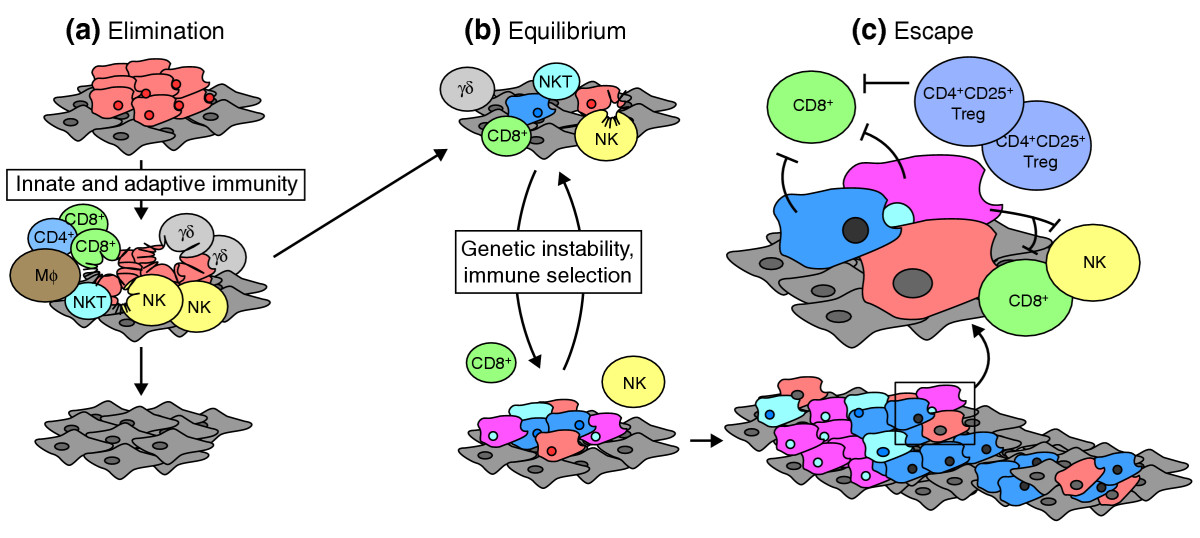
    Credit: Strausberg, Genome Biol. (2005) 6:211

    Credit: Strausberg, Genome Biol. (2005) 6:211

    1. Elimination, when innate and adaptive immune cells work together to identify and destroy tumor cells before a malignancy can form.
    2. Equilibrium, a phase when the immune system contains tumor outgrowth but does not eliminate transformed cells entirely.
    3. Escape, in which tumor cells grow unrestricted by the immune system, and develop into clinically apparent disease.

    Both elimination and equilibrium might be considered satisfactory clinical endpoints for a patient, because tumor cells are either destroyed entirely or held in check to prevent outgrowth of disease.

    The transition from equilibrium to escape is facilitated, at least in part, by the micro-evolution of the tumor cells during equilibrium. The selective pressure of immune recognition and destruction selects for tumor cells that are less immunogenic. Also aiding tumor escape is the breakdown of the immune system, either naturally (as a person ages) or as a direct result of immunosuppression (often induced by the tumor).

    The Mouse Evidence: Knockout and Induced Tumors

    Humans and mice have similar immune systems, with a largely overlapping repertoire of immune cells and effector molecules. The development of mouse strains deficient for specific genes, and the induction of tumors by carcinogens MCA (sarcoma) and DMBA/TPA (papilloma) have demonstrated that NK cells and cytotoxic lymphocytes (CTLs) suppress tumor initiation and growth in vivo. Interferon signaling also plays a key role in immunosurveillance, as demonstrated by the increased tumor susceptibility in mice lacking perforin, IFN-γ, IFNGR1, TRAIL, IL-12, TNF-α, and DNAM-1.

    Numerous cytokine molecules and receptors have also been implicated in controlling induced tumors. Mice deficient in IL-12, for example, develop increased numbers of papillomas than wild-type mice. Interestingly, mice lacking IL-23 or IL-17A are resistant to tumor development, suggesting a tumor-promoting role for these cytokines. Interestingly, DMBA/TPA exposure in mice lacking the TRAIL receptor did not affect the number of induced tumors, but did increase the rate of metastasis to lymph nodes (compared to wild-type mice), indicating a role for TRAIL-R in suppressing metastasis.

    Aging Studies and Spontaneous Tumor Development

    The incidence of spontaneous tumors in normal mice is very low, possibly because they have long telomeres. Many strains of immunodeficient strains fail to develop tumors even after two years of observation. Aging studies in knockout mice, however, have elucidated the roles of certain  genes, effector molecules, and immune cells in the defense against spontaneous tumors. This is an elegant type of experiment that requires some patience; one simply removes specific components of the murine immune system and monitors them for spontaneous tumor development. One striking discovery highlighted in this review was the incidence of immunogenic B-cell lymphomas, which increases from 0-6% in wild-type mice to 40-60% in mice lacking perforin, a cytolytic protein used by NK cells and T-lymphocytes. Penetrance of lymphomas in these mice is even higher when they also lack MHC class I accessory molecules (B2M) or IFN-γ. These observations support the importance of “cytotoxic” immune cells in protecting against spontaneous tumors.

    Aging experiments have also been performed in mice lacking specific immune cell types. RAG-2 knockout mice, for example, develop significantly more ephithelial tumors (35% gastrointestinal, 15% lung), even when raised on broad-spectrum antibiotics in a pathogen-free facility. RAG-2 knockouts that also lack STAT1, a key player in interferon I/II signaling, develop an earlier and broader spectrum of malignancy, including colon and mammary adenocarcinomas.

    Loss of Equilibrium

    The equilibrium phase, in which the immune system holds tumors in check but fails to eliminate them entirely, is an interesting phenomenon. Here we observe a dynamic balance between a powerful immune system response and a genetically heterogeneous population of tumor cells that can persist for a number of years. It has become clear that adaptive immunity, and not innate immunity, takes the lead in controlling tumor outgrowth. This has been demonstrated by experiments in which healthy mice are subjected to low levels of carcinogen exposure (which tends to induce few tumors) and later depleted for CD4+/CD8+ T-cells and/or IFN signaling. As many as 50% of apparently tumor-free mice develop sarcomas at the injection site upon this depletion, suggesting that micro-tumors were present but held in check by adaptive immunity. Granted, the tumors that arise after immunodepletion tend to be highly immunogenic; when transplanted to healthy mice, 40% are rejected by the competent immune response. In contrast, sarcomas obtained from mice that were not immunodepleted tend to grow progressively when transplanted.

    The Human Evidence: Immunodeficency and Immunosuppression

    Although we have fewer experimental liberties with human subjects, clinical and epidemiological data have proven useful. Human patients with specific perforin mutations, for example, not only develop familial hemophagocytic lymphohistocytosis as adults, but have recently been shown to also develop leukemia and lymphoma. Surveillance of human patients with AIDS has shown an increased frequency of several malignancies due to the immunodeficiency. Most often, these tumors are induced by pathogens, such as Epstein-Barr virus (lymphoma), herpesviruses (Kaposi’s sarcoma), and human papilloma virus (cervical cancer) that fail to be eliminated by the deficient immune system.

    Intentional immunosuppression in the recipients of organ transplants can also increase the risk of cancer. Patients receiving kidney transplants, for example, exhibit a three-fold increase in overall malignancy. Most of these, too, are virus-associated tumors, though there’s also an increased risk for colon, lung, pancreas, and other non-infectious cancers. Renal transplant patients are a dramatic example; these individuals have a 200-fold (yes, two hundred) risk for non-melanoma skin cancers, highlighting the importance of immunosurveillance in tumors induced by exposure to UV radiation. Further, the duration of pharmacology-induced imunosuppression and incidence of cancer are positively correlated; that is, the longer the immune system is suppressed, the more likely a tumor will form. Taken together, these observations support the importance of immunosurveillance in preventing human cancers.

    Further evidence of the immunity-cancer relationship, particularly the equilibrium phase, is offered by the occasional organ recipients who develop cancer that originated from the organ donor. I’m horrified to hear that this can happen, but it does. Often, the donors had died of other causes and bore no signs of clinically-detectable disease, suggesting that their immune systems had held cancerous cells in check. The combination of a naive immune system, and immunosuppressive therapies required for successful engraftment, allows these tumors to grow without restriction in the unfortunate recipient.

    Miracles Happen: Spontaneous Tumor Regression

    Perhaps the most compelling evidence for the anti-cancer role of the immune system is the spontaneous regression of melanoma tumors accompanied by T-cell clonal expansion. This phenomenon suggests the ability of CD4+ and CD8+ T-cells to identify tumor-specific antigens and destroy cancerous cells. As many as 100 tumor-associated antigens (TAAs) generate an antibody response in patient serum, though only 8 have been observed in multiple studies. This suggests that TAAs, much like somatic mutations, are largely unique to individual tumors. T-cell responses vary from antigen to antigen; for example, responses to MAGE family antigens are rare, whereas responses to melanocyte differentiation antigen (MART/Melan-A) are seen in >50% of healthy individuals.

    More studies are needed here to catalogue TAAs and quantify their antigenicity across patient populations. Here, too, is where high-throughput sequencing of tumor genomes might offer useful information as well. Knowledge of the full set of protein-coding mutations in a tumor might shed light on its immunogenic potential, or vice-versa, thereby leading to better informed prognoses and treatment decisions.

    Tumor-Infiltrating Lymphocytes and Disease Prognosis

    Even without complete tumor regression, the presence and quality of tumor-infiltrating lymphocytes (TILs) – NK cells, T-cells, and NKT cells – has a favorable prognosis for numerous tumor types. This correlation was first observed in melanoma, where patients with high CTL infiltration of their tumors survived longer. A “landmark” study in ovarian cancer found that 38% patients with high TIL numbers survived longer than 5 years, compared to 4.5% of patients with low TIL numbers. Studies in colon and lung cancers have found that the type and density of TILs was more powerful prognostic indicator than the clinical stage of the tumor.

    There is, of course, a downside to TILs: when they’re macrophages or regulatory T cells. High numbers of these can have a poorer prognosis, possibly due to their immuno-suppressive functions.

    Inflammation and Tumor Development

    Chronic inflammation can contribute to cancer by inducing genotoxic stress, cell proliferation, angiogenesis, and even enhancing tissue invasion. Even so, the tumor-promotion activities of inflammation and tumor-suppressing actions of the immune system are not mutually exclusive. In the authors’ mouse model of MCA sarcoma, for example, tumor development requires several inflammation molecules (MyD88, IL-10, IL1B,and IL-23), but these factors induce the host-protective immune response (IFN and T-cells) that destroy the tumors. In other primary carcinogen models, MyD88 and IL1B promote tumor development, but also facilitate the recognition of dying tumor cells that leads to anti-tumor immunity.

    Another important role of inflammation is the transition from equilibrium to escape, when inflammatory and regulatory immune cells are recruited to the tumor, and then subverted to dampen anti-tumor immunity, allowing cancer progression. Indeed, the authors suggest that pro-inflammatory transcription factors NF-KB and STAT3 may be valuable therapeutic targets, whose inhibition may facilitate the transition from tumor-promoting inflammation to tumor-suppressing immunity.

    References
    Vesely MD, Kershaw MH, Schreiber RD, & Smyth MJ (2010). Natural Innate and Adaptive Immunity to Cancer. Annual review of immunology PMID: 21219185

    AddThis Social Bookmark Button

    Mutation Detection in Rare Disease by Pooled Sequencing

    October 13th, 2010

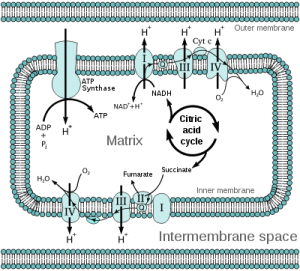
    When it comes to massively parallel sequencing, few areas of human health stand to benefit as much as rare genetic diseases. Indeed, both whole-genome and exome sequencing strategies have identified disease-causing mutations in probands with Charcot-Marie Tooth disease, Miller syndrome, severe brain malformations, and a few other disorders. The Mito10K project took a different approach. They assembled a cohort of mostly unrelated individuals with complex I deficiency (n=103), the most common cause of human respiratory chain diseases.

    complexi-mitochain

    Mitochondrial Electron Transport Chain (Wikipedia)

    Forty-two HapMap samples were included as controls. Instead of employing a whole-genome or exome strategy, they performed deep resequencing of carefully-chosen candidate genes in pools of ~20 samples. And they did it all using a single Illumina flowcell.

    Pooled Sequencing of Candidate Genes

    The candidates included 103 genes that (i) encoded known complex I proteins, (ii) were implicated in the disease, or (iii) were identified by phylogenetic profiling. The 145 kb target space comprised 653 exons from nuclear genes (138 kb) and two mtDNA regions (7 kb). About 90% of target regions achieved at least 100x coverage; the median redundancy was 3,359x per pool, which works out to ~168x per individual. Next, the authors developed a method (“Syzygy”) to model sequencing error and call variants at very low frequencies. A comparison of calls for the HapMap samples to existing genotype data suggested 92% sensitivity and 99.6% specificity, at sites where coverage was 100x or greater.

    Although the pooling strategy worked well for nuclear DNA, there were some problems with the targeted regions in mtDNA. Basically, the distribution of mtDNA was not uniform between samples. That may be due to the fact that while each cell contains exactly 2 copies of each nuclear chromosome, it contains numerous mitochondria and thus numerous copies of the MT chromosome (possibly 20-25 per cell, by one estimate). The resulting shift in sample representation can be quite dramatic. In one pool, for example, 96% of the mtDNA came from a single individual (5% of the pool). The bottom line is that sensitivity to call mutations in pooled samples is going to be lower for mtDNA.

    Variant Calling and “Deleteriousness” Prioritization

    The unfortunately-named Syzygy method identified 652 variants (high confidence); to boost sensitivity, the authors also employed an ad-hoc approach that called 246 more variants supported by at least 3 reads on each strand (low confidence). The 898 calls were filtered to prioritize variants that seemed likely to underlie a rare and devastating phenotype. In short, the authors removed:

    • Variants present in healthy individuals (HapMap controls) or public databases (dbSNP, mtDB, 1000 Genomes).
    • Synonymous or noncoding variants, unless they affected tRNA or splice sites.
    • Missense variants at positions of low evolutionary conservation

    Of 898 detected variants, 216 remained and were validated by multiplexed Sequenom genotyping. Some 82 sites were also Sanger-sequenced to assess the accuracy of the genotyping platform. The comparison revealed 11% false positives and 2% het/hom miscalls, for an overall error rate of 13% for Sequenom assays. Ouch. As for the variant calls, the validation rate was pretty good for high-confidence calls (91/109, or 84%) but rather abysmal for the low-confidence ones (12/107, or 11%).   Intriguingly, validation assays identified 12 additional pathogenic variants that were missed by the discovery screen. Based on these data, the sensitivity of the Syzygy method alone was 79.1% (91/115). That’s not bad, but probably not enough for a study whose goal is to identify rare disease-causing variants.

    New Diagnoses from Validated Mutations

    Some 60 of the sequenced cases lacked a previous molecular-genetic diagnosis. Among these, the authors were able to provide 11 new diagnoses based on mutations in known disease-causing genes. Several lines of supporting evidence were given to support the diagnoses:

    • 6 patients had mutations that were previously known to be disease-causing.
    • 3 patients were homozygous for deleterious mutations that caused splicing defects (observed in cDNA) and no detectable protein (by SDS-page and protein blot).
    • 2 patients had mutations in highly conserved protein domains.

    Intriguingly, half of the cases with known mutations (3/6) were compound heterozygotes; that is, they inherited a different defect in the same gene from mother and father. This apparent prevalence of compound hets in monogenic disease is unsettling because they tend to make pedigree analysis complicated and require detection of both variants in heterozygous form, which is more difficult to do by sequencing.

    Detection and Characterization of Novel Disease Genes

    The key finding of this paper (as suggested by the title) was the implication of two new genes in complex I deficiency: NUBPL and FOXRED1. Pathogenicity of each mutated genes was confirmed by a “rescue” assay in which introduction of wild-type cDNA into patient fibroblasts restored complex I activity. In the absence of rescue, residual complex I activity was markedly reduced (19-40%) in the NUBPL-mutated fibroblasts and strikingly reduced (9-15%) in the FOXRED1-mutated fibroblasts.

    The case with NUBPL mutations was particularly interesting. RT-PCR showed that the dominant mRNA species was truncated, and the full-length transcript hardly expressed at all. Sequencing revealed that the shortened fragment had a branch site mutatation that likely caused exon 10 skipping, as well as a missense mutation (Gly56Arg), both on the paternal chromosome. The maternal allele wasn’t expressed. Array-based copy number analysis, however, showed that the maternal chromosome had a complex rearrangement of NUBPL in which exons 1-4 were deleted and exon 7 was duplicated. Obviously this structural variation was not detected in the discovery screen. I think this highlights two things: the importance of structural variation in human disease, and the limitations of targeted sequencing on NGS platforms.

    Success and Limitations

    As the authors note in their discussion, key to the success of this study was the availability of cellular models of disease, with which the pathogenicity of newly discovered mutations in individual patients could be established. With the two new findings, the 11 newly diagnosed cases, and the 40 or so already-diagnosed cases, the authors now have identified the genetic defect for about half of the cases in their cohort.  What about the rest?  The authors admit that the causal mutations were likely missed because:

    1. They occur in genes not targeted in this study
    2. They affect targeted genes, but reside in noncoding regulatory regions or novel/unknown exons
    3. They were targeted, but not detected due to limited sensitivity (especially in mtDNA)
    4. They were detected, but filtered out as not likely to be deleterious
    5. They are large-scale deletions or rearrangements, which this approach can’t detect

    Despite these limitations, the authors have demonstrated that sequencing carefully-chosen candidate genes in pooled samples, with follow-up validation and experimental support, can successfully identify disease-causing mutations in a good-sized patient cohort. Not bad for a single flowcell.

    References

    Calvo, S., Tucker, E., Compton, A., Kirby, D., Crawford, G., Burtt, N., Rivas, M., Guiducci, C., Bruno, D., Goldberger, O., Redman, M., Wiltshire, E., Wilson, C., Altshuler, D., Gabriel, S., Daly, M., Thorburn, D., & Mootha, V. (2010). High-throughput, pooled sequencing identifies mutations in NUBPL and FOXRED1 in human complex I deficiency Nature Genetics, 42 (10), 851-858 DOI: 10.1038/ng.659

    Ng SB, Buckingham KJ, Lee C, et al (2010). Exome sequencing identifies the cause of a mendelian disorder. Nature genetics, 42 (1), 30-5 PMID: 19915526

    Bilgüvar K, Oztürk AK, Louvi A, et al (2010). Whole-exome sequencing identifies recessive WDR62 mutations in severe brain malformations. Nature, 467 (7312), 207-10 PMID: 20729831

    Lupski JR, Reid JG, Gonzaga-Jauregui C, et al (2010). Whole-genome sequencing in a patient with Charcot-Marie-Tooth neuropathy. The New England journal of medicine, 362 (13), 1181-91 PMID: 20220177

    Lalonde E, Albrecht S, Ha KC, et al (2010). Unexpected allelic heterogeneity and spectrum of mutations in Fowler syndrome revealed by next-generation exome sequencing. Human mutation, 31 (8), 918-23 PMID: 20518025

    AddThis Social Bookmark Button

    This Week at Personal Genomes

    September 8th, 2010

    Later this week, I’ll attend the Personal Genomes meeting at Cold Spring Harbor Laboratory. This is a smaller meeting (less than a hundred participants), but an excellent one by all accounts.

    Keynotes

    There are three keynotes, including one from NHGRI director Eric Green. His and the keynote from Stanford’s Henry Greely seem focused on applying genomic information in the clinic, a theme that will undoubtedly resonate throughout the meeting.

    Greely, H. Preparing for the coming tsunami of clinical genomic information
    Green, E.D. Genomics in 2K10 and beyond—Charting a course for genomic medicine
    Hood, L. Systems genetics and systems biology

    Talks

    I’d heard that the talks at this meeting were of exceptional quality, and by the look of the abstracts, this trend seems likely to continue. The diversity of subject matter is impressive: there are updates on sequencing technology (J. Beechem on quantum-dot nanosequencing, Jonathan Rothberg on IonTorrent) and studies of human genetic variation in general (Conrad). I’m looking forward to a talk by my friend Matthew Bainbridge of Baylor College of Medicine, who will report on mutation discovery [likely by exome sequencing] for autosomal dominant diseases. There will be talks on sequencing to study other heritable complex diseases, such as Crohn’s disease and atherosclerosis.

    Bainbridge, M. Mutation discovery for autosomal dominant diseases
    Beechem, J. Single molecule real-time DNA sequencing on the surface of a quantum-dot nanocrystal
    Brugarolas, J.B. Genome evaluation, functional studies, and research translation in renal cell carcinoma
    Conrad, D. Variation in genome-wide mutation rates within and between human families
    Dimitrova, N. Correlating genotyping and gene expression data with next-generation whole genome sequencing data
    Gibson, N.W. A comparison of two methods for digitally quantifying mRNAs
    Grimmond, S.M. Studying pancreatic cancer at single nucleotide resolution
    Jones, S.J. Clinical utility of genomic sequencing of a rare adenocarcinoma
    Jorde, L.B. Direct estimates of the human mutation rate using whole-genome sequence data
    Laird, P.W. Mining the cancer methylome
    Lunshof, J.E. Personal genomes and phenomes—Reframing health
    Myers, R.M. Personal functional genomics
    Patil, P. Refining a method for processing an individual’s whole genome to clinical utility
    Pérez-Llamas, C. IntOGen, Integrative OncoGenomics for personal cancer genomes
    Ritz, A. Algorithms for resequencing and assembly using strobe sequencing data
    Rothberg, J.M. PostLight sequencing with semiconductor chips
    Schadt, E. Enabling a more comprehensive understanding of your risk of infection from viral pathogens via the construction of a real-time disease weather map
    Schreiber, S. Whole genome sequence of a Crohn disease trio—A paradigm for complex disease etiology discovery
    Teer, J.K. Comparison and application of whole exome and genome sequencing on an individual with high risk for atherosclerosis
    Trevino, L.R. Screening for germline variants that predispose to cancer from next-generation sequencing data
    Varley, K. Allele-specific DNA methylation in a three-generation family reveals genetic influence on epigenetic regulation
    WANG, J. Personal genomes are personalized
    Wilson, R. Whole genome sequencing, analysis and diagnosis of a patient with acute promyelocytic leukemia (APL)
    Worthey, E. Personal genomics in a clinical setting—Experience from an academic medical college and children’s hospital
    Wyman, S.K. Post-transcriptional modification of microRNAs is a common, conserved mechanism that increases complexity in the microRNA transcriptome
    Yandell, M.D. Automated high-throughput analysis of personal genome sequences—Towards clinical interpretation

    Cancer will feature prominently, with talks on pancreatic cancer, adenocarcinoma, and renal cell carcinoma. Peter Laird of USC, a member of the Cancer Genome Atlas research consortium and methylation expert, has a talk on mining the cancer methylome. Rick Wilson, director of the Genome Center at Washington University in St. Louis, will present some very recent work on sequencing and diagnosis of a patient with acute promyelotic leukemia (APL).

    Posters

    No matter the recent debate on the usefulness of poster sessions at scientific conferences, I’m looking forward to this one. I’ll be presenting my group’s work on somatic mutation detection by whole-genome and exome sequencing of five patients with ovarian cancer. These are pre-publication results and (in my opinion) make for an interesting comparison. The question is very pertinent: how do current exome sequencing approaches like Agilent SureSelect perform relative to whole-genome sequencing, when it comes to detecting somatic mutations in coding regions of the genome? Nathan Dees from my group has a poster on another interesting project: whole genome sequencing of a primary breast tumor, liver metastasis, and lung metastasis samples from a single patient.  There are many interesting posters, too many to talk about.  Here’s the full list:

    Adams, D.R. The NIH Undiagnosed Diseases Program—Application of genome-scale sequencing to diagnostic mysteries in single families
    Ahn, S. Comparing and combining two next-generation sequencing technologies for human genome re-sequencing
    Bolser, D.M. The social, political, and economic impact of personal genomes
    Brodzik, A.K. Recent advances in sequence homology assessment in the difference set space with application to the analysis of human genomes
    Brunham, L. Differential effect of the rs4149056 variant in SLCO1B1 on myopathy associated with simvastatin and atorvastatin
    Calvo, S. Targeted sequencing identifies causal disease genes in individual patients with mitochondrial disease
    Caruccio, N. Improved methods for rRNA removal and mRNA-Seq library preparation
    Casals, F. Medical genomics of primary immunodeficiencies
    Cho, V.E. Identification of individuals within study cohorts with unusual intermediate phenotypes
    Choi, M. A compilation of rare functional variations from human exomes
    Craig, D.W. Whole-genome sequencing of autosomal recessive autism
    Decker, B. Clinical analysis of whole genome sequence data at the Medical College of Wisconsin
    Dees, N. Disease progression from primary breast tumor to liver and lung metastases
    Dewal, N. Haplotype specific amplification in high-throughput tumor sequence data
    Dimitrova, N. Multi-modal suite for disease specific analysis of next-generation sequencing data
    Dinwiddie, D.L. Carrier screening of recessive genetic disorders by target enrichment and next-generation sequencing
    Dorkins, H.R. Personal genomes and tomorrow’s doctors
    Gonzaga-Jauregui, C. Assessment of copy-number variation in a family using both whole genome sequencing and array CGH
    Gusev, A. Whole genome low-pass sequencing combined with GWAS data detects variants associated with cholesterol and hemoglobin levels in individuals from the island of Kosrae, Micronesia
    Hall, I.M. Capturing the full spectrum of coding variation with de novo exon assembly
    Hambuch, T. Experiences of whole genome sequencing in the clinical laboratory
    Huang, A.L. Genetic basis of human sleep behaviors—Studies from familial sleep phase syndromes
    Ju, Y. The fine-scale structure of genomic variants and its functional influence on gene expression
    Koboldt, D.C. Somatic mutation discovery in ovarian cancer by whole genome and exome sequencing
    Kuersten, S. Enhanced method to capture the small RNA transcriptome
    Lerner-Ellis, J. Implementing 2nd generation sequencing in the clinic
    Markello, T.C. Whole exome and whole genome sequencing in the NIH Undiagnosed Diseases Program
    Metzker, M.L. Molecular and biochemical characterization of novel syndromes of ketosis-prone diabetes (KPD)
    Parla, J. A comparative evaluation of SNP discovery in human whole exome sequence data versus human whole genome sequence data
    Phan, L. dbSNP and dbVar—NCBI databases of simple and structural variations
    Quinlan, A.R. The landscape of functional mutation in the human exome
    Reid, J. miRNA precursor variants and their possible effects on expression and function
    Repo, S. CAGI—The Critical Assessment of Genome Interpretation, a community experiment to evaluate phenotype prediction
    Ross, M. An approach to clinical interpretive tools for whole genome sequencing
    Sabo, A. The ARRA autism sequencing collaboration, Phase 1—Deep whole exome sequencing in 1000 autism cases and 1000 matched controls
    Saito, T.L. Managing genome databases with UTGB Toolkit
    Sen, S.K. Transcriptome profiling of cardiovascular disease by massively parallel short-read DNA sequencing
    Shah, A. Massively parallel screening of genetic alterations in common cancers
    Stong, N.E. Telomere analysis using next-gen sequence data
    Swan, M. The application of genome-wide association studies of aging in a patient-driven clinical trial
    West, J. Whole-genome sequencing of a family of four—Educational and ethical perspectives
    White, L.D. The emerging role of core sequencing facilities in the personal genomes era
    Xing, E.P. Exploiting a hierarchical clustering tree of gene-expression traits in eQTL analysis
    Xing, E.P. Leveraging genetic interaction networks for joint mapping of marginal and epistatic eQTLs
    Xing, E.P. MoGUL—Detecting common insertions and deletions in a population
    Yan, J. Using genetic information in risk prediction for alcohol dependence in the Collaborative Study on the Genetics of Alcoholism GWAS sample
    Yu, F. Low coverage personal genomics enabled by an integrative SNP pipeline

    As many members of the NGS blogosphere are aware, CSHL has implemented some strict rules of blogging while at their meetings. Thus, I’m likely signing off until next week, when I’ll post a full report.

    AddThis Social Bookmark Button

    Marco Island Meeting Preview

    February 22nd, 2010

    agbt-logo

    The Advances in Genome Biology and Technology (AGBT) meeting begins this week at Marco Island. I’ll be there to present a poster on our somatic mutation detection pipeline, and also to learn about what’s to come in next-generation and next-next-generation sequencing.

    Some of the companies are already ramping up. Last week Pac Bio announced the intial members of their partnership program to provide complete solutions for single molecule real-time sequencing. Microfluidics company Caliper Life Sciences formed a scientific advisory board for next-gen sequencing that included WashU’s own Vince Magrini.  Other companies – Illumina, Complete Genomics, and RainDance Technologies, for example – are hosting workshops or other events at AGBT.

    AGBT Sessions Not To Miss

    Day 1 of the meeting will be very strong, with opening remarks from Len Pennacchio (JGI),  Kelly Frazer (UCSD) on genomic enrichment, Mike Snyder (Stanford) on paired-ends for SVs/assembly, and Barbara Wold on ChIP-Seq. On Day 2, Stacey Gabriel of the Broad Institute will discuss applications of new sequencing technology to medical and cancer genetics. Carlos Bustamante of Stanford will present the complete genome sequencing and analysis of African-American and Mexican-American individuals. WashU’s David Wang will give a talk on metagenomic approaches to pathogen discovery.

    Some friends of mine are giving talks later that evening. Jeff Reid (Baylor College of Medicine) has what looks to be a very interesting talk on miRNA precursor variants in schizophrenia. Daniel MacArthur, of Sanger and Genetic Future fame, will present “Loss-of-Function Mutations in Healthy Human Genomes,” likely based on his work with the 1,000 Genomes Project.

    Cancer Genomics and Sequencing

    I’m very excited about an entire session devoted to cancer genomics. Elliott Margulies (NHGRI) will discuss the sequencing and analysis of a melanoma genome. In what may be the first application of single-molecule sequencing to cancer, the sequencing of Ewing’s Sarcoma on a Heliscope instrument will be presented by Timothy Triche of Childrens Hospital Los Angeles. Two speakers from BC Cancer Agency will discuss rearrangements in follicular lymphoma and capture/transcriptome sequencing in lung cancer.

    Whole Genome Sequencing

    There are to be big-picture sequencing talks as well.  Genome center co-director Elaine Mardis will present “Single Molecule Sequencing to Detect and Characterize Somatic Mutations in Cancer Genomes.” Stan Nelson of UCLA will give a talk, presumably on his group’s recent publication – whole genome sequencing of a glioblastoma cell line on ABI SOLiD.

    I’ll be there, and posting regular updates, as the latest and greatest in sequencing technologies unfolds at Marco Island.

    AddThis Social Bookmark Button